Every business owner wants more conversions, lower bounce rates and higher customer lifetime value. Most look at marketing budgets, ad spend, or SEO rankings to find the answer. Few look at the one factor sitting quietly behind every digital interaction a customer has with their brand: design.
If you've ever asked what UI UX design is and why agencies, investors and product teams treat it as a revenue driver rather than a cosmetic add-on, you're asking the right question at the right time. UI/UX design isn't about making a website "look nice." It's about removing friction between a visitor's intent and the action you want them to take whether that's making a purchase, booking a call, or filling out a form.
In this guide, we'll break down what UI and UX design actually mean, how they differ, why the distinction matters for your bottom line and what a real UX audit uncovers about the money you may be leaving on the table. Whether you're running a SaaS platform, an e-commerce store, or a service-based business anywhere in the US, the principles below apply directly to your growth strategy.
UI/UX design is a combined discipline that governs how a digital product looks, feels and functions. It covers two related but distinct areas:
Together, UI and UX form the complete experience a person has when they land on your website, open your app, or interact with your digital product. One governs what they see. The other governs what they feel and do.
A useful way to think about it: UX is the blueprint of a house: the layout, the flow between rooms, the placement of doors and windows so movement feels natural. UI is the paint, furniture and finishes that make the house pleasant to be in. You need both. A beautifully painted house with a confusing floor plan is still frustrating to live in. A perfectly laid-out house with bare walls and exposed wiring won't make anyone want to stay.
This is why answering "what is UI UX design" properly requires looking at the relationship between structure and surface, not just one or the other.
This is one of the most searched questions in digital design and for good reason the two terms are often used interchangeably, which causes real confusion in hiring, budgeting and strategy decisions.
User interface design focuses on the touchpoints a person directly interacts with. This includes:
A UI designer asks: Does this screen communicate clearly? Is it visually consistent? Does it guide the eye toward the right action?
User experience design focuses on the journey a person takes to accomplish a goal. This includes:
A UX designer asks: Can the user find what they need? Does the flow make sense? Are we removing obstacles between intent and action?
UI is about interaction. UX is about outcome. A site can have a stunning UI and still have terrible UX if, for example, the checkout process takes seven steps when it should take three. Conversely, a UX flow can be logically perfect but feel untrustworthy or unappealing if the UI is outdated or visually inconsistent.
This is precisely why a user interface design specialist and a UX strategist often work as a team rather than as interchangeable roles each solves a different half of the same problem.
This is the question that should matter most to business owners, marketing directors and founders. The honest answer: UX design affects conversions more directly than almost any other on-site factor you control.
Here's why.
Every extra click, unclear label, or confusing form field gives a visitor a reason to abandon their action. People arrive on your site with intent to buy, to learn, to book. Poor UX introduces doubt and effort into that intent. Good UX removes it.
Consider a checkout flow that requires account creation before purchase versus one that allows guest checkout. The difference in completion rate between these two flows can be substantial, simply because one path respects the user's time and the other doesn't.
Visitors form an opinion about your credibility within seconds of landing on a page long before they read your copy. Inconsistent spacing, mismatched fonts, low-contrast text, or a cluttered layout signal a lack of professionalism, even if your product or service is excellent. UI design is doing reputational work whether you've planned for it or not.
If a visitor can't find what they're looking for within a few seconds, they leave. Strong information architecture, a core UX discipline, ensures that navigation menus, internal links and page hierarchy match how users actually think and search, not how an internal team organizes the sitemap.
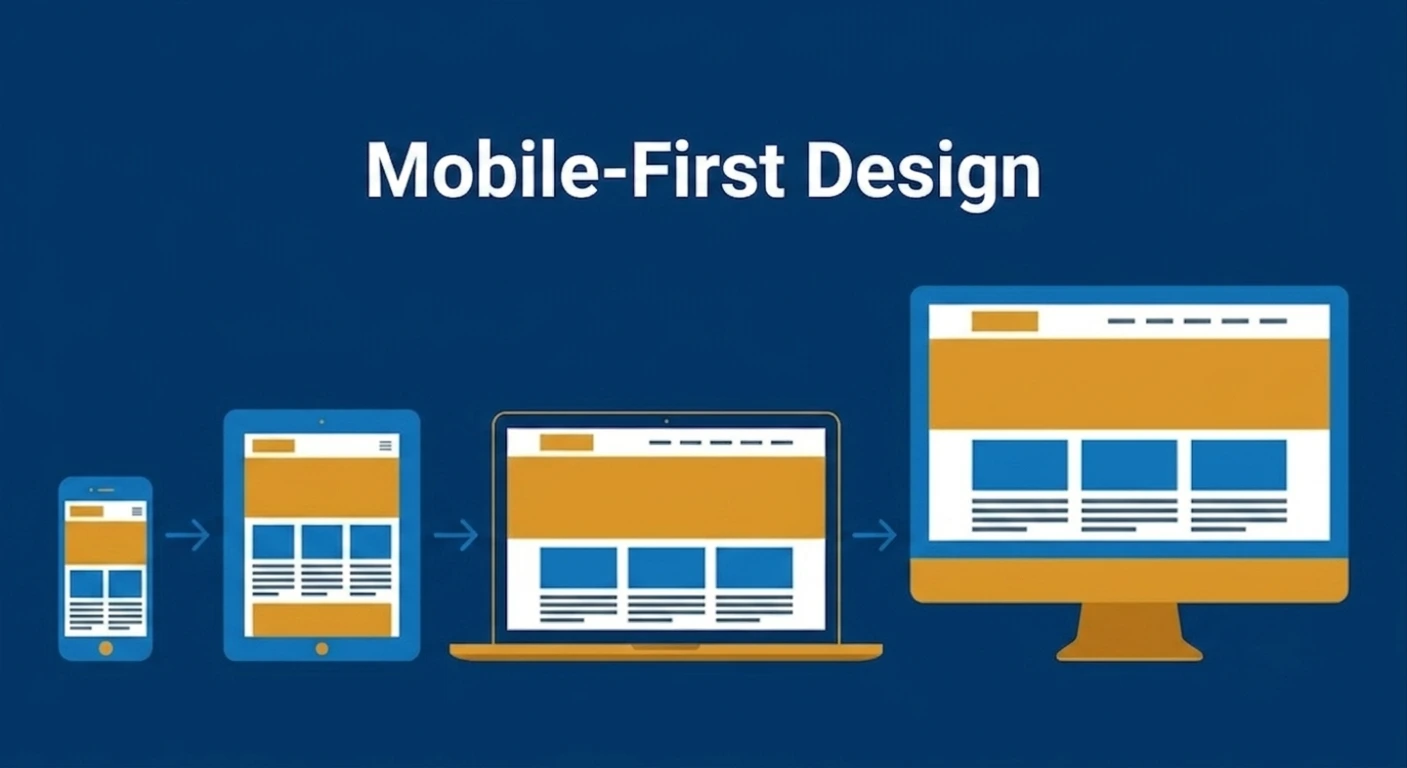
With the majority of traffic for most industries now coming from mobile devices, a UX strategy that wasn't designed mobile-first is already losing conversions before a visitor reads a single word. Responsive UI design, thumb-friendly tap targets and fast-loading layouts aren't optional; they're prerequisites for conversion.
Designing for accessibility proper contrast ratios, screen-reader compatibility, keyboard navigation, alt text isn't just a compliance checkbox. It widens the pool of people who can actually use your product, which directly correlates with more potential conversions and reduces legal exposure under ADA-related digital accessibility standards.
A well-built design system, a shared library of components, patterns and rules ensures that every new page, feature, or campaign landing page maintains the same level of usability and visual trust. Without one, UX quality degrades over time as different contributors make inconsistent decisions and conversion rates quietly erode.
When you add these factors together, it becomes clear that UX design isn't a "nice to have" layered on top of marketing, it's the foundation that determines whether your marketing spend converts at all. You can drive thousands of visitors to a page through paid ads or SEO, but if the UX is broken, you're funding a leaky bucket.
Many businesses still budget for design as a one-time line item, something you pay for once when the website launches and revisit only when it looks "dated." This mindset undervalues design's actual function inside a growth strategy.
If your conversion rate improves because of better UX, your cost per acquisition drops without spending an additional dollar on ads. A 1-2% lift in conversion rate, compounded across your existing traffic, often pays for a UX investment many times over within months.
A frictionless, intuitive product experience encourages repeat use, reduces support tickets and builds the kind of trust that turns first-time buyers into repeat customers. Retention is far cheaper than acquisition and UX is one of the strongest levers for retention.
Every interaction a user has with a poorly designed interface chips away at brand perception. Conversely, a polished, consistent UI reinforces the idea that your business is established, trustworthy and worth paying a premium for.
For B2B companies, a confusing product demo or a cluttered dashboard can stall deals in the evaluation stage. Clean, intuitive UX shortens the time it takes a prospect to understand value, which shortens the overall sales cycle.
A UX audit is a structured evaluation of your existing website, app, or product to identify usability problems, friction points and missed conversion opportunities. It's typically the first step any serious user experience agency takes before recommending a redesign, because it replaces guesswork with evidence.
A thorough UX audit generally covers:
Reviewing the interface against established usability principles consistency, feedback, error prevention and recognition over recall to flag violations that quietly frustrate users.
Mapping the actual paths users take (often very different from the paths designers intended) to identify where people get stuck, distracted, or drop off.
Pinpointing the exact steps in a signup, checkout, or lead-generation flow where the highest percentage of users abandon the process.
Testing contrast ratios, keyboard navigation, screen-reader compatibility and semantic HTML structure against modern accessibility standards.
Evaluating how the interface performs across device sizes, connection speeds and touch interactions, since a desktop-optimized experience often performs poorly on mobile despite looking fine in a browser preview.
Assessing whether the most important information and calls-to-action are positioned where users naturally look first and whether visual weight matches business priority.
Comparing your UX against direct competitors and category leaders to identify where your experience falls short of evolving user expectations.
The output of a UX audit is typically a prioritized list of issues ranked by impact and effort giving you a clear roadmap rather than a vague sense that "something feels off" about your site.
To fully understand what UI UX design in practice, it helps to know the artifacts a design team produces along the way. These aren't just internal deliverables; they directly affect the quality of the final product you ship.
Low-fidelity, black-and-white skeletons of a page or screen that map out layout and structure without visual styling. Wireframes let teams validate flow and hierarchy quickly, before investing time in visual design, making changes cheap and fast at this stage.
Interactive, clickable mockups that simulate how a real product will behave. Prototyping allows teams and stakeholders to test flows, gather feedback and catch usability issues before a single line of production code is written, saving significant development cost down the line.
Observing real users as they attempt to complete tasks within a prototype or live product. Usability testing surfaces friction points that internal teams, too familiar with their own product, often can't see themselves.
A centralized library of reusable components buttons, forms, color tokens, typography scales paired with documented rules for how they're used. Design systems ensure visual and functional consistency as a product scales across teams, features and platforms.
Frameworks like WCAG (Web Content Accessibility Guidelines) provide measurable benchmarks for color contrast, navigation and assistive technology compatibility, ensuring the product is usable by the widest possible audience.
Each of these processes exists to reduce risk: the risk of building something users don't understand, can't use, or simply abandon.
Not every business needs a full redesign, but certain signals consistently indicate that UX issues are quietly suppressing revenue:
If two or more of these apply to your business, the cost of inaction is likely already showing up in your analytics; you just need a structured audit to quantify it.
Whether you're hiring an in-house designer or evaluating a user experience agency, the right partner should be able to demonstrate:
A strong UI UX design agency USA-based businesses can rely on should treat design as a strategic function that sits alongside marketing and product, not a downstream task completed after everything else is decided.
UI/UX design doesn't operate in isolation. It works most effectively when integrated with the rest of your digital ecosystem:
Treating UI/UX as connected to rather than separate from your SEO and development strategy ensures that improvements in one area aren't undermined by gaps in another.
If you're convinced that UX issues might be costing you revenue but aren't sure where to begin, here's a realistic, low-risk path forward:
This framework treats UX as an ongoing discipline rather than a one-time project which mirrors how the businesses that consistently outperform competitors actually operate.
So, what is UI UX design, really? It's the combined discipline of how your digital product looks and how it works and together, those two things determine whether a visitor converts, returns, or leaves. UI handles the visual layer that builds first impressions and trust. UX handles the structural layer that determines whether people can actually accomplish what they came to do.
The businesses that treat design as a strategic, revenue-driving function backed by research, testing and continuous iteration consistently outperform those that treat it as a one-time cosmetic project. If your conversion rates, bounce rates, or customer feedback suggest that friction is costing you growth, the most effective next step isn't guessing at a redesign. It's getting a clear, evidence-based picture of exactly where your experience is breaking down.
Ready to find out what's holding your conversions back? Request a Free UX Audit and get a prioritized, data-backed breakdown of the UX issues affecting your revenue.
What is UI UX design in simple terms?
UI/UX design refers to how a website, app, or digital product looks (UI) and how it functions for the people using it (UX). UI covers visual elements like layout, color and buttons, while UX covers the overall journey a user takes to complete a task, from navigation to checkout.
What is the difference between UI and UX design?
UI design focuses on the visual and interactive elements a person directly sees and touches typography, color, buttons and layout. UX design focuses on the structure and flow behind those elements and how easily someone can find what they need and complete their goal. UI is the surface; UX is the underlying experience.
How does UX design affect conversions specifically?
UX design affects conversions by removing friction at every step of the user journey from confusing navigation to overly long checkout forms. Clearer flows, faster load times and intuitive layouts reduce abandonment and make it easier for visitors to complete the actions that drive revenue, such as purchases, sign-ups, or bookings.
What does a UX audit from IB2Marketing typically include?
A UX audit from IB2Marketing evaluates your site's usability, navigation, mobile responsiveness, accessibility compliance and conversion funnel performance. The result is a prioritized list of issues ranked by business impact, giving you a clear roadmap for improvements rather than a generic redesign recommendation.
Does IB2Marketing work with businesses outside major cities like New York or San Francisco?
Yes. While IB2Marketing supports clients including UX designer engagements in New York and UX audit projects in San Francisco, the team works with US businesses nationwide, providing UI/UX strategy, audits and design support regardless of location.
A Performance Marketing Company Delivering Results-Driven Solutions For Businesses

Have a question? We’d love to hear from you. Send us a message and we’ll get back to you as soon as possible.
Send 609-596-5511